Keep Your Bellevue Home Dry Through Winter Storms
Winter storms in Bellevue press every part of a roof. Wind drives rain under shingles. Valleys take continuous flow. Skylight and chimney flashing flexes with temperature swings. Gutters fill with leaves from Lake Hills and Somerset trees, then overflow down fascia boards. A home in Bellevue stays dry when the roof system sheds water, seals at every penetration, and breathes through the attic. Atlas Roofing brings Pacific Northwest field experience to that work across Bellevue, Seattle, and the Eastside. The result is a roof that stays tight through weeks of rain and gusts along I-405 and I-90.
This article speaks to homeowners and small property owners who want a reliable path through the wet season. It covers how a Bellevue roof fails in storms, what to fix first, and when to plan a roof replacement before leaks spread. It focuses on practical judgment, not theory, with a lens shaped by King County weather and housing stock. The goal is simple: keep water out, move it off the roof fast, and extend the life of the system that protects the home.
Why winter in Bellevue pushes every roof system
Bellevue storms bring high rainfall with long wet stretches, so small defects compound fast. Water works laterally under wind. Moss traps moisture on shaded north and east slopes. Freeze-thaw cycles at higher spots near Cougar Mountain flex flashing and open hairline gaps. These are regional patterns, not one-off events, and they change how a roofing contractor plans repair and replacement.
Rain volume drives drainage design. Valleys and low points must move water without ponding. On composite shingle roofs, heavy flow at a valley will find any missing underlayment or open nail hole. On metal or tile, wind-driven rain pushes at rake edges and under transitions where one material meets another. roofing contractor Renton Strong wind events common along the I-90 corridor lift ridge caps and expose nails. Skylight flashing kits that were fine in drier climates can struggle here if they were not integrated into the underlayment correctly.
Local tree canopy adds a second load. Needles and leaves from Crossroads and Factoria neighborhoods wash into gutters and settle behind chimneys and skylight saddles. That debris holds water and slows runoff, which raises hydrostatic pressure. In plain terms, water piles up and presses into seams and fastener holes. A clean system moves water; a dirty system turns minor gaps into active leaks.
Where Bellevue roofs actually leak during storms
Most active leaks do not start in the middle of an open shingle field. They start at details. Flashing is the thin metal that bridges joints at walls, chimneys, and skylights. When flashing fails, water follows the path behind it and shows up rooms away from the entry point. The stain on a ceiling can be ten feet from the hole. A storm reveals these weak points fast because water volume and wind both rise.
Common storm leak sources in Bellevue include failed flashing at chimneys and skylights, lifted ridge caps, missing or cracked shingles, aged pipe boot flashing at plumbing vents, and moss-damaged shingles on shaded slopes. Pipe boot flashing is the rubber gasket around a vent. It cracks with age. Moss pries up shingle edges and holds water against the mat, which is the base layer under the granules. Granule loss makes the mat visible and speeds wear. On low-slope porch tie-ins, storms test the underlayment and any step flashing tucked up a wall. One missing piece means water entry when wind drives rain sideways.
Flat and low-slope sections on mid-century homes in Enatai or Lake Hills carry added risk. Water moves slowly on those planes. If the membrane is aged or seams were not heat-welded well, a gust can push water under a cut edge. A flat section that meets a pitched shingle slope needs a clear, tight transition. That transition is where many leaks begin.
What inspection looks like before a Bellevue winter
An effective pre-storm inspection starts in the attic and moves outside. The attic reveals water tracks, rusted nails, and wet insulation that are not visible from the roof. It also shows if the roof deck, the layer of plywood under the shingles, has darkened or sagged. Outside, the inspection checks key points that storms will stress. Chimney step and counter flashing should be tight against the brick and shingled correctly. Skylight flashing kits should integrate with the underlayment so water runs over, not under, each layer. Roof vents should sit flat with intact fasteners and sealant. Ridge caps should be solid and not cracked.
Gutters and downspouts matter as much as shingles in a storm. A 5-inch seamless K-style aluminum gutter handles a typical eave. A 6-inch gutter may be appropriate on large roof planes or long valleys that dump water in one spot. Downspouts sized at 3x4 move more water than 2x3. Hidden hangers keep gutters anchored in wind. None of that matters if the run is clogged, so a fall cleaning is not cosmetic. It keeps the roof dry by keeping water moving to grade.
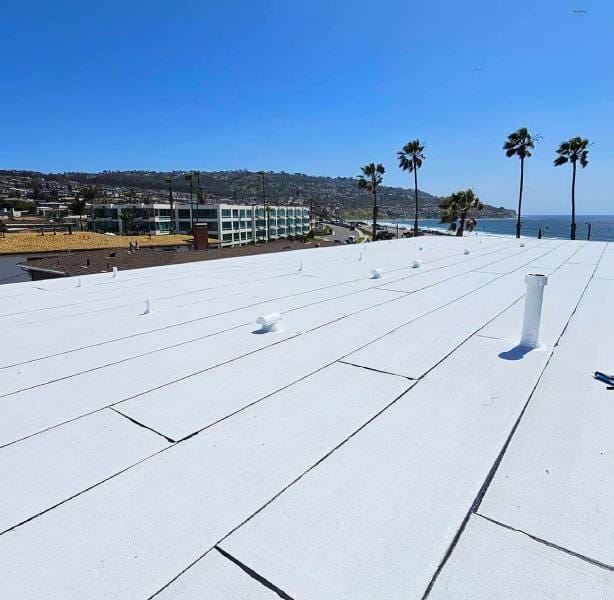
On flat or low-slope sections, seams, penetrations, and drains decide performance. A TPO membrane with a heat-welded seam, which means the edges are fused with heat into a single layer, holds better under freeze-thaw stress than a glued seam. EPDM, a rubber membrane, relies on adhesive lap seams that can separate with age. Internal drains must be clear before the first big storm, or ponding begins, which is standing water that speeds failure. Scuppers, the wall openings that let water exit, need clear screens and sound edge metal.
Materials that work in Western Washington rain
Architectural asphalt shingles are the most common residential roof in Bellevue. They offer strong wind resistance and a layered look. In Western Washington, asphalt composite shingles often live closer to 15 to 25 years depending on maintenance and exposure. Shingles from national brands such as GAF, Owens Corning, CertainTeed, and Malarkey perform well when installed over a sound deck with correct underlayment and ventilation. Underlayment is the moisture barrier under the shingles. A modern synthetic underlayment resists tearing and sheds water better than old felt. Ice and water shield, which is a self-sealing membrane, belongs at eaves, valleys, and around penetrations to stop wind-driven rain and ice-edge infiltration.
Metal roofing, such as standing seam panels in 24-gauge steel, sheds water and resists moss because the surface is smooth. Standing seam means the panel seams rise above the water plane and lock together. That design reduces leak points. Corrugated profiles work too, but they use exposed fasteners that need periodic service. Metal costs more than shingles in general market ranges, but roofing in Renton the surface cleans more easily in our climate and can last longer under sustained rain when maintained.
Concrete and clay tile roofs need tight flashing and a sound underlayment system because the tile is not the water barrier. The underlayment does the real waterproofing. In Bellevue neighborhoods with tile, storms reveal underlayment age at valley metal and penetrations first. When tile cracks under foot traffic or tree impact, water follows the crack to the underlayment. If that layer is brittle, leaks start. Replacing underlayment under tile is more complex than swapping a few shingles, which factors into repair planning.
Cedar shake roofs match the Pacific Northwest look, but they require more maintenance in moss-heavy areas. Hand-split or tapersawn shakes have texture that holds spores. Without regular cleaning and treatment, moss grows between shakes and holds water where it should drain. That moisture shortens the roof’s service life and invites wind-driven entry during a storm. Where shade is constant, a homeowner may choose a different system on the next replacement to limit moss hold, such as metal or a smooth architectural shingle with periodic treatment.
Repair first, replace when the roof is at the end of its service life
Storm season does not always demand a roof replacement. Often the right move is targeted roof repair. Fixing failed flashing at a chimney or skylight, replacing a damaged ridge cap, sealing and replacing pipe boot flashing, or swapping out cracked shingles can extend a roof that still has service life. Moss removal that is done correctly and a maintenance treatment reduce water retention on shaded slopes. Gutters that are cleaned and pitched right solve many overflow reports that look like roof leaks but are not.
A roof replacement makes sense when the system has aged out or has widespread failures that patch work cannot solve. Signs include heavy granule loss across large areas, curling or brittle shingles that crack on light touch, widespread moss damage, a sagging roof deck from long-term leaks, or multiple active leaks in different areas. In those conditions, new underlayment and a full tear-off produce a watertight shell that patches cannot replicate. Tear-off means removing old roofing down to the deck. Recover means installing new shingles over the old. Tear-off lets the installer replace rotten decking and reset flashings correctly. In Western Washington, tear-off with new underlayment, ice and water shield at eaves and valleys, and new flashing is the durable path when the roof has reached its life limit.
Costs vary widely in the general market. Small repairs can land in the low hundreds to low thousands depending on scope and access. Full roof replacements can vary from the low five figures to significantly more based on size, pitch, material, and details like skylights and chimneys. An exact price requires a written estimate that documents the roof’s conditions and the selected system.
Attic ventilation and insulation affect storm performance
Ventilation and insulation decide how the roof handles moisture from below. Ridge and soffit vents move air through the attic. Inflow at soffit vents and outflow at a ridge vent keep the roof deck dry and help the shingles run at a stable temperature. Without balanced intake and exhaust, warm indoor air meets cold roof surfaces and condenses into water droplets. That moisture can look like a roof leak. It also feeds mold and accelerates decking rot. Off-ridge vents or mechanical ventilation may be used where a ridge vent is not possible. The goal is the same: stable, dry airflow.
Insulation keeps living space heat out of the attic. If insulation is thin or displaced, indoor heat escapes upward and warms the roof deck from below. In storms, warm decks melt frost unevenly and create small cycles of melt and refreeze that open seams at cold edges. In Bellevue’s wet season, a tuned combination of attic insulation and roof ventilation keeps the deck drier and more stable, which helps the roof handle wind-driven rain events without opening gaps.
Skylights, chimneys, and walls are where storm water tries to enter
Every penetration in a roof is a potential entry point during a storm. Deck-mounted skylights sit directly on the roof deck and rely on a flashing kit and underlayment integration. Curb-mounted skylights sit on a small framed wall above the roof and often manage water transitions better on low slopes. The right choice depends on roof pitch and layout. Any skylight should have a saddle or cricket, which is a small ridge that splits water above the opening, so heavy rain and debris do not pile up at the uphill side.
Chimneys need step flashing that weaves with each shingle course and counter flashing that tucks into a mortar joint and laps over the steps. Sealant alone is not a long-term solution. Where a roof meets a sidewall, step flashing must be layered correctly and tied into a housewrap or building paper behind the siding so water runs out, not in. Bellevue homes that have a second-story wall meeting a lower roof should have kickout flashing at the base of the wall to throw water into the gutter and prevent wall rot at that corner. In storms, these details are what keep water outside.
Flat and low-slope sections demand membrane choices that fit our climate
Many Bellevue homes include a low-slope over a porch, garage, or rear addition. Those planes do not shed water like a steep shingle roof. Single-ply membranes such as TPO and EPDM or modified bitumen cap sheets are better fits at low slopes. TPO, a thermoplastic membrane, uses heat-welded seams that fuse into one layer and resist freeze-thaw cycles. EPDM, a synthetic rubber, has a long track record and uses adhesive seams. Modified bitumen, often installed as a torch-down cap sheet over a base, offers durable surfacing for traffic areas and tight tie-ins to metal or tile.
Attachment method matters. Fully adhered attachment, which glues the membrane to the substrate, resists flutter and wind uplift. Mechanically fastened attachment, which uses rows of fasteners and plates under the laps, installs faster and can be a strong choice on clean decks. Ballasted attachment is rare in residential work. Tapered insulation, which is rigid foam sloped to drain, is often the difference between a flat that ponds and a flat that drains. Ponding water shortens roof life. A slight slope built with tapered polyiso boards moves water to a drain or scupper and stabilizes the system through long rains.
Moss removal and treatment extend shingle life in Bellevue
Moss is not cosmetic. On porous surfaces such as asphalt composite or cedar shake, it holds water against the roof. Water softens the shingle mat and pries edges open. Over time, the shingles lose granules at a faster rate and start to crack. In Bellevue’s tree-lined neighborhoods like Lake Hills and Somerset, shaded slopes on the north and east sides show moss growth first. Periodic removal and treatment slows that cycle. Removal must protect the shingles. The goal is to lift moss and stop regrowth, not grind off the surface. A gentle cleaning and an approved treatment product extend the period between growth cycles.
Smooth surfaces reduce moss hold. Metal roofing and smooth membranes on low-slope sections do not give moss the same place to root. Where shade is permanent, switching to smoother materials on the next roof replacement can reduce maintenance needs while improving storm performance.
Gutter sizing and placement carry storm loads to grade
Gutters catch roof water and carry it to downspouts. In Bellevue storms, that means managing high-volume flow from upper to lower roofs without overflows. A 5-inch seamless gutter paired with 2x3 downspouts is common. A 6-inch gutter with larger 3x4 downspouts carries more water and helps at long valleys that dump to a single point. Hidden hangers keep gutters fixed under wind load. Drip edge metal at eaves guides runoff cleanly into the gutter and protects the roof edge from wind-blown entry. Splash blocks or drain pipes should move discharge away from foundations so it does not circle back into crawl spaces.
Gutter guards reduce debris load but do not remove the need for service. In heavy leaf zones near Kelsey Creek Park, seasonal cleaning still matters. Guards that sit flush and do not lift shingles preserve the roof edge. Guards that slip under the shingle and prop the edge up can void shingle coverage and create a capillary path for water to wick backward. A correct guard fits the gutter, stays below the shingle edge, and keeps the water path clear.
Insurance and storm damage documentation
Wind events that blow off shingles or break branches onto the roof can qualify as insured losses. Documentation matters. Clear photos of missing shingles, damaged ridge caps, or broken skylight glass, plus interior photos of active staining, give the adjuster the information needed to scope the claim. A written inspection report that pinpoints the cause and notes whether the damage is sudden or from wear guides the process. Temporary protection, such as an emergency tarp secured without causing further harm, limits additional damage while the claim is reviewed and the permanent repair is scheduled.
Atlas Roofing supports this process for Bellevue homeowners and small property owners. The team provides inspection notes, photos, and scope descriptions that align with what carriers request. The intent is to move from event to repair without delay while securing the property against more water entry during the next round of storms.
Planning a roof replacement before the next wet season
If the roof is near the end of its service life, planning a roof replacement between late spring and early fall sets the home up for winter. A full tear-off allows inspection of the deck and replacement of any rotten sections. It also allows integration of ice and water shield at eaves and valleys, which blocks wind-driven rain at the edges. New drip edge metal, step and counter flashing, and pipe boot flashing bring every detail back to spec. On shingle roofs, synthetic underlayment and architectural shingles from brands such as GAF, Owens Corning, Malarkey, or CertainTeed provide solid storm resistance when installed correctly with proper ventilation.
For homes with low-slope areas, the replacement plan should specify membrane type, thickness, and attachment. TPO membranes commonly come in 45-mil, 60-mil, and 80-mil thicknesses. Thicker membranes offer more puncture resistance. EPDM is available in similar ranges, and modified bitumen cap sheets are paired with compatible base sheets for durability. Where interior drainage is needed, the plan should include tapered insulation to move water to drains. Edge metal and scuppers need correct sizing and terminations so water leaves the roof cleanly.
How Bellevue’s neighborhoods and site conditions change the roofing approach
Downtown Bellevue high-density blocks put roofs in wind channels between buildings, which increases uplift at ridge and rake edges. Eastgate and Factoria slopes face long tree lines that add debris and shade. Somerset’s elevation brings colder nights that stress seams during freeze-thaw. Lake Hills lots have wide canopies and steady moss pressure. Each area pushes a different detail to the front of the plan. A roofing contractor with local experience will set attic ventilation to match intake and exhaust even on complex roofs, select underlayment and ice and water shield placement that reflects wind direction and exposure, and call for gutter sizing that handles the valleys created by multi-level designs common off NE 8th Street and 148th Avenue NE.
Access also varies. Homes along Lake Washington near Meydenbauer Bay may require bargeboard protection and staging that avoids landscape damage. Houses near Bellevue Square often have limited driveway space and need careful material logistics during active retail seasons. Across the Eastside and into Kirkland, Redmond, and Issaquah, the approach changes with pitch, material, and tree cover, but the weather driver stays the same. The roof must move a lot of water and hold details under wind for many days in a row.
Working from Renton across Bellevue, Seattle, and the Eastside
Atlas Roofing operates from its Renton headquarters at 707 S Grady Way Suite 600-8. That location gives fast access to Bellevue via I-405, to Seattle via I-5 and I-90, and to Redmond and Kirkland via SR 520. The team services homes in Bellevue, Seattle neighborhoods like Queen Anne and Ballard, and Eastside cities including Redmond, Kirkland, Issaquah, and Sammamish. This footprint matters. Roofing in King County is about local weather patterns and material performance under long wet seasons. A crew that knows how moss forms on the north slope behind a fir stand, how wind funnels between buildings near Downtown Bellevue Park, and how ponding appears on a low-slope addition in Crossroads will make better calls on site.
A note on timing and safety during active storms
During a storm, the priority is to stop active water entry without causing more damage. That can mean a temporary cover on a damaged area or securing a lifted ridge cap once wind subsides. Permanent work should happen when conditions allow solid adhesion and safe footing. Shingle adhesives and membrane bonds perform to spec within certain temperature and moisture windows. Pushing work outside those windows risks poor adhesion that fails on the next system. Planning around the forecast, especially during November and December, sets repairs and replacements up to last.
What roofers look for on older Bellevue shingle roofs
On older asphalt composite roofs, roofers scan for consistent patterns that indicate end-of-life. These include widespread granule loss that shows black mat across large areas, a brittle feel to shingles that snap under light bend, and surface cracks that align with the tab pattern on older 3-tab shingles. They check ridge and hip caps for splits, look under tabs on the north slope to see if moss has lifted the edges, and inspect valleys for exposed nails or rusted metal. If the roof feels soft underfoot, that points to decking rot from long-term moisture. A replacement plan should include new decking where needed.
What commercial-grade details can help residential performance
Certain commercial details translate well to residential areas that see heavy water flow. Cover boards, which are dense boards installed above insulation, resist denting and improve membrane puncture resistance on low-slope areas that see foot traffic. Heat-welded seams on TPO reduce reliance on sealants that can age out. Edge metal with continuous cleats holds stronger under wind than face-fastened edges in exposed locations. Tapered insulation that creates even a small slope, such as 1/8 inch per foot, can turn a problem flat into a reliable plane that drains. These moves add cost, but in high-exposure zones along open corridors by I-90 or near waterfront gust paths, they increase reliability through the worst storms.
Choosing materials and details with service life in mind
Every choice on a roof affects how it handles storms. A thicker shingle or membrane resists impact and wear longer. Stainless or hot-dip galvanized fasteners hold up to moisture better than standard steel. Pipe boots made from higher-grade compounds stretch and seal longer around vents. Ridge vents that baffle wind prevent driven rain from entering while still venting the attic. Flashing metals such as prefinished aluminum or galvanized steel should be sized to overlap correctly and layered under, not over, the weather surface. These specifics do not add flash to a home tour, but they carry value every time the forecast goes to days of rain.
How to decide between repair and roof replacement before the next storm cycle
The call comes down to three points. First, is the leak source isolated and correctable with a targeted fix, such as new flashing or a ridge cap replacement. Second, does the roof still have enough service life to justify that fix, or will other areas fail next month. Third, will the repair integrate cleanly with the existing system so it does not create a new weak point. If the answer to any of these is no, a roof replacement plan likely makes more sense. If yes, a repair before the next storm can be the right investment. A good roofing contractor will show photos and explain each choice so the homeowner can decide based on facts that match the house, not generalities.
Serving Bellevue homeowners and property managers through the wet season
Single-family homes, duplexes, and small multifamily buildings across Bellevue need quick response and a consistent standard of care during winter. HOAs and property managers have the added requirement of coordinating work across multiple units with consistent materials and documented scopes. Atlas Roofing’s residential and commercial capability covers both, from asphalt composite shingle installation and cedar shake repair to metal and tile systems, and flat roof sections that require TPO, EPDM, hot mop built-up, or torch-down modified bitumen. The team handles skylight installation, gutter replacement, and attic insulation and ventilation so related components do not become leak points during storms.
For many Bellevue owners, the right winter strategy pairs preventive maintenance with a next-season plan for roof replacement if the system is aging out. That approach limits surprises during the wet months and positions the property for long-term durability.
Why local experience improves storm outcomes
Western Washington is different from drier regions. Asphalt composite shingles often reach the shorter end of the 15 to 25 year range here without maintenance because of persistent moisture and moss. Heat-welded thermoplastic seams hold better through freeze-thaw cycles seen at higher Eastside elevations. Moss patterns favor smooth surfaces on shaded slopes. Debris loads from evergreens force higher gutter service intervals. These are not theoretical claims. They are observable facts on roofs from Bellevue to Redmond and Kirkland. A roofing company that builds systems around those facts gets better results when storms hit.
What to expect during a repair or replacement visit
Homeowners often want to know how a roof visit will run. A repair call begins with confirmation of the leak location inside, an attic check for water tracks, and a roof walk to find the source. The crew isolates the cause, photographs it, and explains the fix. If a storm is active, temporary protection may be installed to stop entry until permanent work can be completed safely. A replacement project starts with site protection, tear-off, deck repair as needed, underlayment and ice and water shield placement, flashing installation, and then the primary roofing system. Ventilation components are set to balance intake and exhaust. Gutters and skylights are handled to match the plan. The crew cleans the site and hauls away debris so the only change is a dry, sound roof overhead.
A final word on staying dry through Bellevue winter storms
Keeping a home dry through a King County winter is a system job. Shingles, flashing, underlayment, ventilation, gutters, and any low-slope membranes must work together. Storms expose weak links first. The right inspection finds those links and the right repair or roof replacement solves them before water spreads. On houses from West Bellevue to Eastgate and up through Somerset and Crossroads, the pattern is the same. Plan for water volume, protect penetrations, and keep the attic dry from beneath. Do that, and the forecast becomes less of a concern.
Why Bellevue property owners choose Atlas Roofing
Atlas Roofing is a Renton-based roofing contractor serving Bellevue, Seattle, the Eastside, and King County. The company is a Washington State licensed contractor, license #ATLASRS758K1, and is fully insured. The team handles residential and commercial roofing, roof repair, roof inspection, roof maintenance, new roof installation, and roof replacement across asphalt composite shingles, cedar shake, metal, tile, TPO, EPDM, hot mop built-up, and torch-down modified bitumen. Services include skylight installation, gutter installation and replacement, attic insulation and roof ventilation work, moss removal, storm and wind damage repair, and insurance claim documentation support. Financing options are available. A free estimate with a written proposal is provided, and completed work is backed by material and workmanship warranty. To keep a Bellevue home dry through winter storms, call (425) 728-6634 or visit atlasroofingwa.com to schedule a free estimate.